
Wonder, Weariness, and Realization: Finding Joy on the Other Side

Updated: Apr 23

Nintendo has a leak problem. Hopefully they know a plumber. Jokes aside, the internet is abuzz with the latest news from "prominent gaming insider" Nick Baker—that not only is Nintendo working on a full remake of The Legend of Zelda: Ocarina of Time, but that an official Ocarina of Time-themed Switch 2 console may also be on the way. And that’s not all. Supposedly, we’re also getting a new classic-style Star Fox game this year, MercurySteam is working on Metroid 6, a pixel-art-style Super Metroid remake is in development, and a new 3D Super Mario game is targeting a 2027 release.
Talk about crazy stuff, right? That’s pretty big news—if any of it turns out to be real.
When it comes to rumors and speculation, I usually approach it all with a very small grain of salt. I tend to sit firmly in the camp of “I’ll believe it when I see it.” But I’ll admit—it’s hard not to pay attention when the internet starts going into a frenzy. I mean, anyone can start a rumor. But these? They’re everywhere. YouTube, Reddit, NintendoLife, IGN, ScreenRant, and so many more.

It feels like every corner of the gaming space is talking about the same thing. I’ve been watching this industry—and this community—for far too long to not recognize what’s happening. People are probably tearing their hair out with excitement over what all of this could mean. And you know what? I’ll be honest. It got me, too. Just a little.

There was a moment—brief, but real—where the kid in me lit up. That pure, overwhelming excitement. The kind that takes over completely, where for a second, nothing else matters. I had almost forgotten what that felt like. But it faded almost as quickly as it came. What followed wasn’t excitement. It was something closer to deflation. Maybe even a quiet kind of sadness. Being an adult does that sometimes. Reality has a way of settling in, and it’s not something you can easily ignore. Maybe I’ve just lived too long in this ever-growing, ever-changing gaming industry. Maybe I’ve seen too much, experienced too much, or felt disappointment too many times. Because I keep coming back to the same pattern. Moments like this—moments that should feel exciting—often lead somewhere else entirely. They start with hype. That excitement builds on possibility—the feeling that something special might finally happen. And then… they don’t. When that happens enough times—especially growing up with gaming—it starts to wear on you. It becomes harder to simply be a fan. Because once you recognize the pattern, you can't unsee it. And for me, it always seems to lead back to one game in particular.

For those of you who may not already know, The Legend of Zelda: Ocarina of Time isn’t just any game. It’s not only one of the greatest Zelda titles ever made—it’s widely considered one of the greatest games of all time. And yet, it’s also one of the most re-released. It began on the Nintendo 64 in 1998. Then came The Legend of Zelda: Ocarina of Time Master Quest on the Nintendo GameCube in 2002 and The Legend of Zelda: Collector's Edition in 2003. It returned again through the Wii Virtual Console in 2007, followed by the Wii U Virtual Console in 2015. In 2011, we received a full remake with The Legend of Zelda: Ocarina of Time 3D on the Nintendo 3DS. And in 2021, the original version was added to Nintendo Switch Online.

That’s not just preservation. That’s repetition.
And to be fair, there’s a reason for it. This game carries a massive cultural legacy. It makes sense that Nintendo would continue to bring it forward for new generations. But even with all of those re-releases, one thing still stands out. The Legend of Zelda: Ocarina of Time 3D remains locked to Nintendo’s previous handheld—the Nintendo 3DS. And for years, that’s been the one thing fans have been asking for. Not another port of the original. Not another version tied to a subscription service. Just one simple request: bring the Nintendo 3DS remake forward. And honestly… it’s not an unreasonable ask. Nintendo has spent much of the Switch era building a pattern of bringing games from previous systems forward—sometimes with enhancements, sometimes with small refinements, but consistently enough that it’s shaped expectations.

Donkey Kong Country: Tropical Freeze made the jump from the Wii U in 2014 to the Nintendo Switch in 2018. Mario Kart 8, originally released on the Wii U in 2014, returned as Mario Kart 8 Deluxe in 2017 and went on to become one of the best-selling games of all time. Even New Super Mario Bros. U found new life as New Super Mario Bros. U Deluxe on the Switch in 2019. This isn’t the exception. It’s the pattern. So when fans look at The Legend of Zelda: Ocarina of Time 3D, the question isn’t if it could happen. It’s why it hasn’t.

For fans of the series—and for the gaming community at large—it’s important to understand where this comes from. Why it matters. We’ve spent years wondering. Speculating. Debating. Years hearing the same rumors, over and over again, that something like this is finally coming. And now, here we are in 2026, hearing those whispers again. Only this time, it’s supposedly a full remake—bigger, more ambitious, with an even larger budget. And yet, through all the wonder and possibility…I'm surprised to find that I don’t really feel excited. And it’s not just because it’s a rumor. It’s because of what usually comes with it. Nintendo has this unique ability to create magic—to surprise us, to remind us why we fell in love with games in the first place. But that magic so often arrives with caveats. With compromises. With quiet disappointments.
Come with me on a journey

Where It All Begins
Let’s go back to The Legend of Zelda: Link’s Awakening for Nintendo Switch. Released in September 2019, this game was an absolute surprise. It felt like it came out of nowhere. Its diorama-style, almost toy-like presentation was charming, unexpected, and full of personality. It reminded us that Nintendo still knew how to create something truly special. And we loved it. As gamers—as fans of this series—we bought into it completely.

But naturally, that love turned into anticipation. If Link’s Awakening could be reimagined like this, what about The Legend of Zelda: Oracle of Ages and Zelda: Oracle of Seasons from the Game Boy Color era in 2001? What about The Legend of Zelda: The Minish Cap, originally released for the Game Boy Advance in 2004? Can you imagine what those experiences could be like? Deep down, our hearts and our minds wanted to experience these games with this beautiful new art style. Once we started asking those kinds of questions, that was it. Those became the next shared dream across the gaming community.

But unfortunately, nothing ever came of it. Just years of hoping, wondering, speculating, debating, and even more years of rumors. Nintendo eventually brought those titles back—but not in the way many had hoped. In February 2023, The Legend of Zelda: The Minish Cap was added to Nintendo Switch Online, followed by The Legend of Zelda: Link’s Awakening DX, and later Oracle of Ages and Oracle of Seasons in July 2023. For some, that was enough. For others, it felt like another near miss. A quiet confirmation that we weren’t getting what we had hoped for.
The Legend of Zelda: Skyward Sword tells a similar story—just from a different angle.

Originally released for the Nintendo Wii in November 2011, Skyward Sword was known for its divisive motion controls, requiring the Wii MotionPlus accessory for precise, one-to-one sword movement. While some praised its immersion, others found it awkward, fatiguing, and in need of constant recalibration. Then came The Legend of Zelda: Skyward Sword HD for Nintendo Switch in July 2021. This version introduced both motion controls using the Joy-Con controllers and a fully playable button-only scheme, allowing sword strikes to be mapped to the right analog stick while camera control required holding the L button. It was thoughtful. Smart. A genuine improvement. And best of all—it worked. It gave the game a second life. But that success sparked new expectations. If Skyward Sword could return like this, what about the others?

The Legend of Zelda: The Wind Waker and The Legend of Zelda: Twilight Princess—two games from two different generations of Nintendo consoles—found new life in HD on the Wii U. The Legend of Zelda: The Wind Waker HD released in September 2013, followed by The Legend of Zelda: Twilight Princess HD in March 2016. Both were beloved remasters with meaningful quality-of-life improvements. Both felt like perfect candidates for the Nintendo Switch. After experiencing The Legend of Zelda: Skyward Sword HD on the Switch, this just made sense. Once we realized the possibilities, that was it. Those games became the next shared dream across the gaming community. Not only were these the games we wanted to return to, but they were also the worlds we wanted to carry with us. The power of the Switch gives us the ability and the freedom to take them anywhere. But once again… nothing. Nothing every came of it. Just more years of hoping. More years of wondering. More years of speculating. More years of debating. More rumors.

It is worth noting that, like the additions of Oracle of Ages and Oracle of Seasons, Nintendo eventually brought The Legend of Zelda: The Wind Waker to Nintendo Switch Online in June 2025. But it was the original GameCube version included in the NSO library—not The Wind Waker HD. And on the surface, that’s still something worth appreciating. It means more people can experience these games again. It means these worlds aren’t being left behind entirely. But at the same time, it’s hard not to notice what isn’t there. The Wind Waker HD wasn’t just a simple re-release—it was a refined version of the original, with meaningful quality-of-life improvements, updated visuals, and a smoother overall experience. The kind of version that feels like the definitive way to play. And yet, that version remains absent. So while it’s nice to see the GameCube library grow with some heavy hitters, it’s hard to ignore the feeling that something is missing. Not in a loud or obvious way—but in a quiet, lingering sense of incompleteness. Because it highlights the growing gap between what could be—and what is.
Fragments of Something Greater
I know we’ve been unpacking a lot within The Legend of Zelda series. But this pattern isn’t limited to just one franchise. There are many others. Take Super Mario 3D All-Stars.

I remember when it released on the Switch in 2020. Like The Legend of Zelda: Link’s Awakening remake, it felt like another one of those rare, surprising Nintendo moments—something that came out of nowhere and instantly grabbed everyone’s attention. A collection featuring three of the most iconic 3D Mario games—Super Mario 64, Super Mario Sunshine, and Super Mario Galaxy—all bundled together on the Nintendo Switch. It was something we hadn’t really seen since Super Mario All-Stars on the SNES. It was exciting. It was nostalgic. It was a chance to revisit some of the most important games in Nintendo’s history on their flagship hybrid console.
But once the excitement faded and reality started to set in, something felt… incomplete. And that “something” wasn’t just one thing.
Super Mario 64 returned largely unchanged—presented in its original 4:3 aspect ratio, with only slight visual sharpening and no meaningful updates to its camera or controls. Super Mario Sunshine saw a bump to HD resolution and the addition of widescreen support, but its core frustrations remained intact, with no real adjustments or quality-of-life improvements to modernize the experience. And while Super Mario Galaxy made the transition to the Switch surprisingly well—adapting its motion-based gameplay to both Joy-Con and handheld controls—it, too, remained largely untouched beyond resolution and input changes.

Three iconic games. Three important pieces of Nintendo’s history. But at their core, they were still just that—ports. Cleaner. Sharper. More accessible… but not truly reimagined. No new content. No meaningful enhancements. No deeper celebration of what made these games so special in the first place. And then there was what was missing. Super Mario Galaxy 2—one of the most critically acclaimed games in the series—was nowhere to be found. And to top it all off, the collection itself was a limited release, both physical and digital. As of March 31, 2021, it can no longer be purchased, nor can these games be bought individually on the platform. It’s something I wrote about at the time—something I tried to make sense of back then. And now, all these years later… it still doesn’t quite make sense. And for years, that’s where things stayed. Super Mario 3D All-Stars came and went. The deadline passed. The collection disappeared. And Super Mario Galaxy 2 remained missing—something we kept circling back to, year after year. And then… six years later, something finally changed.
With the theatrical release of The Super Mario Galaxy movie, Nintendo made yet another surprise announcement: Super Mario Galaxy 1 + 2 for the Nintendo Switch.
And this time, it didn’t feel incomplete.
This collection came with a variety of meaningful enhancements. Both games were presented in full HD with improved textures and lighting, running smoothly with refined performance. And for the first time, Super Mario Galaxy 2 stood alongside the original, completing what once felt like a missing piece. It wasn’t just a return. It felt like a step forward. But even that step forward came with a familiar trade-off.

We get something. We get excited. And then we start asking what’s next—what’s missing—what could have been. Because even here, it’s not perfect. If you already owned Super Mario 3D All-Stars, you already had Super Mario Galaxy. And now, suddenly, there’s a more complete version of that same game—presented with improvements and bundled alongside Super Mario Galaxy 2. Meanwhile, Super Mario 64 and Super Mario Sunshine are left behind in that original collection… untouched. Unimproved. Frozen in time. It’s an upgrade—but it’s also a fragmentation. A step forward… that somehow still feels uneven. And yet, at the same time, I’m glad it exists. I’m grateful that these games continue to find their way forward—that they’re still being preserved, still being played, still being experienced by new generations. But that feeling doesn’t quite go away. Because even in moments like this—moments that should feel complete—you can’t help but wonder what it would have looked like if everything had been brought forward together—with the same level of care and intention.
And then, in February 2023, we finally got a glimpse of what that could look like.
Metroid Prime Remastered released on the Nintendo Switch.
What It Could Have Been
The announcement was shocking—in the best way possible. Not only did it exist, but the digital version launched immediately after it was revealed. More importantly, it was done right. There was care. Attention to detail. And a $39.99 price point that felt fair. This wasn’t just a simple port. The game was fully remastered—featuring modernized controls alongside the original control scheme, allowing players to choose how they wanted to experience it.
The visuals were completely overhauled with updated textures, improved lighting, and reworked assets that brought the world to life in a way that still respected its original design. Even the smallest details were considered. The user interface was redesigned. The sound design was enhanced. Performance was smooth and consistent. Load times were minimal. It felt polished—intentional. And perhaps most importantly, it felt complete. Not a partial upgrade. Not a fragmented release. Not something tied to a limited window or locked behind a subscription. It was a definitive version of a classic—made accessible, modern, and preserved the way it deserved to be. This surprise drop had everyone talking. Articles, videos, blog posts—everywhere you looked, people were saying the same thing:
This is how you do a remaster.


And naturally, after re-experiencing this game with a fresh coat of paint and meaningful quality-of-life improvements… we wanted more. Metroid Prime 2: Echoes, originally released on the Nintendo GameCube in 2004. Metroid Prime 3: Corruption, released on the Nintendo Wii in 2007. Deep down, it all just made perfect sense. Like many of the games mentioned earlier, we wanted to experience those worlds again—this time with the same care, the same attention, the same level of refinement. Once we saw what was possible, that was it. Those games became the next shared dream across the gaming community. Nintendo had an opportunity to fully rebuild the Metroid Prime trilogy—building hype, excitement, and momentum leading into the much-anticipated Metroid Prime 4: Beyond.

I mean, why not? Nintendo had already shown—with The Legend of Zelda: Skyward Sword HD, and even with Super Mario Galaxy in Super Mario 3D All-Stars—that motion-heavy Wii games could be adapted to standard controls. Surely they could do the same with Metroid Prime 3: Corruption. But once again… like so many moments before it, nothing ever came of it. Just more years of hoping. More years of wondering. More years of speculating. More years of debating. And more rumors. It was exhausting.

Metroid Prime 4: Beyond was eventually released in December 2025—something that, to many, felt like it quietly closed the door on any potential remasters for the remaining games. And even with the introduction of Nintendo GameCube titles to Nintendo Switch Online, Metroid Prime 2: Echoes is still nowhere to be found. Maybe it’s coming. Maybe it’s not. But that uncertainty—that endless “maybe”—is exactly what makes all of this feel so deflating. Because after everything—the years of waiting, the speculation, the resets in development, the hope that built up over time—you would expect something more. Not just a release, but a moment. Something that acknowledges what this series means to the people who have been there from the beginning. Instead, it came and went quietly. A brief mention. A release date. And then… on to the next thing. And maybe that’s just how things are now. Maybe not every release gets to feel like an event. But for a series like Metroid—for something that has meant so much to so many for so long—it’s hard not to feel like something was missing. Not just the remasters. But the recognition. The celebration. The sense that this moment mattered.
When It Starts To Wear On You
So, as you can see, these patterns are hard to ignore. And for me, they’re even harder to shake—because my entire life has been so deeply rooted in this industry from the very beginning. And here we are again, talking about The Legend of Zelda: Ocarina of Time. We might be getting another remake. Maybe even a Nintendo Switch 2 system themed around it. That all sounds pretty darn cool. But because of these patterns… I can already see how this plays out.

The game releases.
We fall in love with it all over again.
And then we start asking the next question: What about The Legend of Zelda: Majora’s Mask?
We imagine it. We build it up in our minds—what it could look like, how it could feel, how it could recapture that same magic. And if history tells us anything… That’s where it stops. More years of hoping. Wondering. Speculating. Debating. Rumors. I say all of this as someone who has been there from the beginning. I’m 42 years old. I grew up with Nintendo. I’ve lived through its highs, its experiments, its magic. I was even there at E3 2019—the final E3—when The Legend of Zelda: Link’s Awakening for Nintendo Switch was revealed. It felt absolutely magical. And that’s what makes this all so complicated. Because Nintendo can still create that magic. They can still surprise us. Still remind us why we fell in love with games in the first place.

But they don’t always sustain it. And after a while, that inconsistency starts to wear on you. Not all at once—but slowly, over time. It changes the way you experience these moments. The excitement is still there… but it’s different now. Quieter. More cautious. You feel it—but you’re already bracing for what comes next. And eventually, you start to recognize that feeling. You start to understand where it leads. So what do you do? Do you keep waiting? Keep hoping that maybe this time will be different?
For me—and for many others in the gaming community—the answer isn’t as simple as it used to be. Because gamers are passionate. Deeply so. And eventually, that passion starts to shift. It becomes something more active. More personal. And at some point… people stop waiting.
They start saying

So We Built It Ourselves
Quietly, over the years, the gaming community hasn’t just been waiting, hoping, or praying. It’s been building. Creating. Reimagining. While official releases come and go—sometimes incomplete, sometimes delayed—fans have been filling in the gaps in their own way. And I’ve seen this firsthand. Over the years, I’ve spent time exploring projects, communities, and creations built entirely by fans—people who care deeply about these games, these worlds, and what they could be. And what I found was something I didn’t fully expect.
This rabbit hole goes deep.

For those of you who have followed my blog over the years, you’ll know this isn’t the first time I’ve stepped into this space. I’ve talked about these things before—at length. But even now, years later, the gaming community still never ceases to amaze me. There’s a level of passion here that’s hard to fully put into words. A desire not just to preserve these experiences, but to expand them. To reimagine them. To ask questions that official releases never quite answered—and then go out and answer them anyway. There’s so much out there.
Fan games. ROM hacks. Reimaginings. Projects built within existing engines, others shaped through mods, and some created entirely from the ground up using tools like Unreal Engine, Unity, or Blender. I’ve discovered original soundtracks—entirely new compositions built for games that never had them. Modern updates—fan-made patches that smooth out old mechanics or bring new life to aging systems. Quality-of-life improvements—better camera controls, faster menus, small refinements that make these games feel more natural today. I’ve seen “what if” questions turned into fully realized experiences—randomizers that completely reshape how a game unfolds, alternate versions of familiar worlds, even entirely new adventures built from the foundations of something we already loved.
And honestly, it’s incredible.

Long before I ever picked up a Steam Deck, I had already started exploring this space in different ways. I spent time with retro handhelds like the Anbernic RG35XX and the Retroid Pocket 2—devices that opened the door to ROM hacks and fan-made experiences I had never seen before. On PC, I went even deeper. I dabbled in fan games. I streamed randomizers—Ocarina of Time, A Link to the Past, Resident Evil 2, even Super Metroid. These weren’t just small tweaks—they were entirely new ways to experience games I thought I already knew. And through all of that, I started to understand just how creative and passionate this community really is. But even then, it still felt a little fragmented. Different devices. Different setups. Different ways of accessing everything. It took effort. It took time. It took knowing where to look. Then I got a Steam Deck and everything changed.

Suddenly, all of those experiences—everything I had been exploring across multiple devices and platforms—came together in one place. More accessible. More seamless. More personal. But more importantly… it opened the door to something I didn’t fully expect. Not just a new way to play games—but a new way to experience them. To shape them. To make them feel personal again. Naturally, I started exploring. Tweaking settings. Installing tools. Seeing just how far I could take it. And before long, I found myself stepping into something much bigger than I anticipated—a whole ecosystem of community-driven projects designed to unlock the full potential of this little device. That’s when I found EmuDeck.

At its core, EmuDeck is a tool that simplifies emulation on the Steam Deck. But calling it just a setup tool doesn’t really do it justice. It handles everything—from installing emulators across multiple generations of consoles to organizing your library, configuring controls, and even integrating your games directly into Steam so they feel native to the system. It removes the friction. It takes something that used to be complicated and makes it feel seamless. And because of that, it becomes something more than just a utility. It becomes a gateway. Because once you’re in, you start to see what’s possible. And that’s when I discovered something that genuinely stopped me in my tracks.
PrimeHack.
This wasn’t just another emulator tweak or visual upgrade. PrimeHack is a custom-built version of the Dolphin emulator, designed specifically for the Metroid Prime series. But what makes it special is how it transforms those games. Instead of relying on their original control schemes, PrimeHack reworks them entirely—bringing modern first-person shooter controls into a game that was never originally designed for them. Mouse and keyboard. Precision aiming. Fluid movement. It feels natural on PC. And the Steam Deck? It’s technically a portable PC—which means it can run this flawlessly. And when it does, it’s incredible how tailored the experience becomes. The controls feel precise. Intentional. From the D-Pad to the track pads, even the way every input translates on screen just feels right. Add in HD texture packs, higher resolutions, and performance that can push toward 4K at 60 frames per second…Suddenly, something familiar feels completely new again.
Metroid Prime. Metroid Prime 2: Echoes. Metroid Prime 3: Corruption. These weren’t just games I remembered anymore—they were experiences I was rediscovering in a way that felt modern, refined, and, in some ways, closer to what I had always imagined they could be. But what really stood out to me was Metroid Prime 3: Corruption. This was a game built entirely around the Nintendo Wii—designed from the ground up with motion controls in mind. That was part of its identity. Part of how it played. And yet… here it is. Running on a Steam Deck. Fully playable with buttons. And not just playable—comfortable. Fluid. Natural.
For the moments that originally required motion, those inputs are mapped to the Steam Deck’s trackpads. You simply move your thumb—almost like using a D-pad—and somehow, it just works. It feels intuitive in a way I didn’t expect. That’s the part that really stuck with me. Not just that it works… but how well it works. And the fact that all of this comes together so seamlessly on the Steam Deck—through EmuDeck, through community effort, through pure passion—is kind of incredible.
This wasn’t something coming from Nintendo. This was the community.
Would it be great if Nintendo gave Metroid Prime 2 and 3 the same remaster treatment it gave the original? Absolutely. The care, the attention to detail, the quality-of-life improvements—we still want to see these incredible sequels receive that same level of love. And if that day ever comes, so many of us will be there to support it.
But if it doesn’t… there’s no need to keep waiting. Because what the community has built with PrimeHack is nothing short of incredible. These experiences aren’t just ideas anymore. You can play them. Right now.
Rebuilding the Games We Never Let Go
Something else has been quietly happening within the gaming community—something even more fascinating than mods or fan remakes. Decompilation and recompilation projects. At a glance, those words sound technical. Maybe even a little intimidating. But what they represent is something incredible.

Decompilation is the process of taking a finished game—something that was never meant to be opened up—and carefully reverse-engineering it piece by piece. Function by function. Line by line. The goal isn’t to copy the original code, but to understand it well enough to recreate it—perfectly—with entirely new, non-copyrighted code. In other words, the community is learning how these games work at their deepest level… and then rebuilding them from the ground up. And once that happens, everything changes. Suddenly, these games aren’t locked to aging hardware anymore. They can run natively on modern systems. Higher resolutions. Higher framerates. Proper widescreen support. Deep, meaningful modding. Not as an overlay—but as part of the game itself. It’s not just preservation. It’s transformation. And then there’s recompilation.
Projects like N64 Recompiled take a slightly different approach. Instead of fully rebuilding a game through decompilation, it translates the original game’s code into something that modern systems can understand and run directly. Think of it less as rebuilding the game… and more like teaching it a new language so it can live somewhere else. Compared to emulation—which tries to simulate an entire console—these approaches focus only on the game itself. The result is something cleaner. More efficient. And often, surprisingly, better performing. What we’re seeing here isn’t just technical experimentation. It’s a community-driven effort to preserve these experiences in a way that feels natural on modern hardware—especially for games from the Nintendo 64, PlayStation, and early PC eras. And once you see it in action… it changes how you think about what’s possible.

And nothing made that clearer to me than this: Ship of Harkinian. A fully native PC port of The Legend of Zelda: Ocarina of Time—made possible through years of careful decompilation work by the community. Let that sink in for a moment. This isn’t emulation. It’s not running the game through a virtual Nintendo 64. This is Ocarina of Time—rebuilt, recompiled, and running directly on modern hardware. And once you experience it that way… it’s hard to look at the original the same again.
For years, people have been asking for a definitive version of Ocarina of Time on modern hardware. At the very least, we’ve said—just bring the 3DS version forward. That alone would have been enough. But when even that never came, the community stepped up and did something remarkable. They built their own. A fully realized, definitive version of Ocarina of Time—complete with full mod support and features that go far beyond what most of us ever expected. You can experience the game exactly as it looked back in 1998 on the Nintendo 64. Or you can reshape it entirely.
There are mods that bring in the visual style of the 3DS remake. Others that reimagine the characters using their Super Smash Bros. Melee designs. Some even pull from early concept art—offering a glimpse into what could have been. And that’s just the beginning.
Higher resolutions. 4K. Even up to 120 frames per second. Native widescreen—and even ultrawide support. A built-in randomizer. Quality-of-life improvements that feel so natural, you start to forget they were never there to begin with. And maybe the most incredible part of all… You can play it almost anywhere. PC. Windows. Linux. macOS, Wii U, Android devices—and my favorite, the Steam Deck. It’s discovering things like this that genuinely amaze me.
The dedication. The passion. The care behind a project like this—one that continues to evolve over time—is exactly why I love the gaming community. And you know what else is amazing? Remember earlier, when we talked about Nintendo’s patterns? How I could already see how things might play out with an Ocarina of Time remake? The excitement. The possibilities. And then… the next question: “What about The Legend of Zelda: Majora’s Mask?” Well… That question already has an answer: Zelda 64: Recompiled.
Once I saw this game in action, it felt familiar. In the same way Ship of Harkinian reimagines Ocarina of Time, Zelda 64: Recompiled does something very similar for Majora’s Mask. It brings the game forward—higher resolutions, smoother performance, modern controls—but what really surprised me was how far it goes beyond that. Mods, visual overhauls, entirely new ways to experience a world that already felt unforgettable. It’s not just preservation anymore—it’s expansion. And if you thought Majora’s Mask looked impressive before, the 1.2 release trailer showcases just how much further the community has taken it.
And that’s when it really hit me. There’s no need to keep hoping. No need to keep wondering. No need to imagine what these games could look like on modern hardware. Because in so many ways… we’ve already found our way there. These aren’t just ideas anymore. Definitive ways to experience two of the most important Zelda games are real, evolving, and more accessible than ever. And before I fully realized it… I had already started experiencing that for myself.
I Realized I Already Had It

A few months back, I talked about rediscovering my love for gaming when I powered on my Wii U, unlocked it, and began exploring what it could really do. And once again, it was the gaming community that made that possible—not just possible, but accessible, understandable, something I could actually do myself. And once I did, it opened everything up. I remember connecting the system to my 4K OLED TV and booting up The Legend of Zelda: The Wind Waker HD and The Legend of Zelda: Twilight Princess HD.

It was a glorious moment. Coming back to those games after all this time—seeing them on a modern display—it felt like visiting old friends I hadn’t seen in years. But what caught me off guard was just how emotional it felt. I already loved these remasters, but seeing them like this—upscaled, vibrant, alive on a 65-inch OLED—they didn’t just look “good for their age.” They felt fresh, present, like they still belonged here… like they had never really left. It was a beautiful moment—one where I realized that I didn’t need to wait for these HD collections to make their way to the Nintendo Switch. I already had them. And that realization stuck with me. Because it made me start asking a different question—not what I was missing, but what would actually change. Sure, a Switch version might bring higher resolutions or portability. But at its core, it would still be the same experience I was already having. The same worlds. The same moments. And for me… that was enough. Especially as I started paying closer attention to how these kinds of releases are being handled.
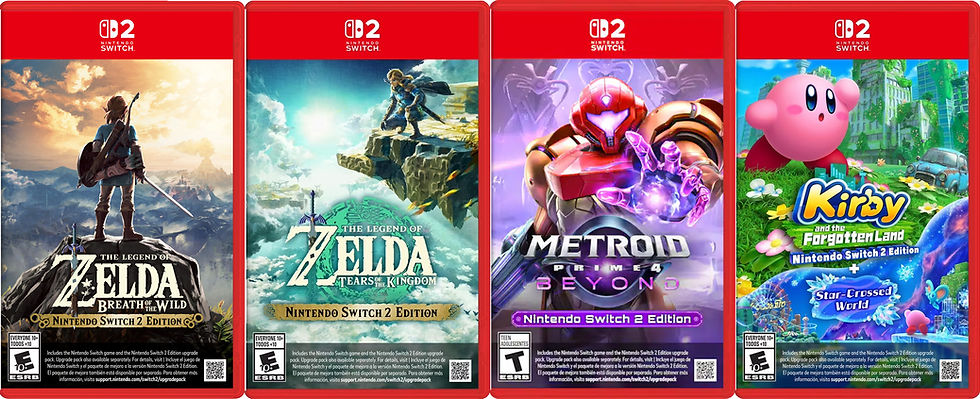
With newer “Switch 2 Editions,” there’s often an added cost tied to enhancements like higher resolution or performance upgrades. And while those improvements are nice, they also made me take a step back and think about what I was really gaining—and what I already had. Because when I looked at my own setup—my Wii U, my Steam Deck, the tools and communities behind them—I realized I wasn’t lacking anything. If anything, I already had more flexibility, more accessibility, and more control over how I experienced these games than I ever expected. And that’s when it really started to click. It wasn’t just about having access to these games—it was about having the freedom to experience them on my own terms. And that changes everything.
We No Longer Have To Wait
The things I’ve done with my modded, unlocked Wii U are nothing short of incredible. I have the ability to back up my games directly from the console—copying my discs and storing them locally on an external hard drive. It allows me to preserve my physical media while still having instant access to everything I own. With my entire library ready to go at any moment, it starts to feel less like an older system and more like a modern console.
And that’s just the beginning.
It’s amazing what the community has been able to do with this system. What many once saw as missed opportunities on Nintendo’s part have become opportunities for players to shape the experience themselves. Things we always wished the console could do—features that never officially arrived—are now possible through community effort.
Even something as simple as themes, which the Wii U never had, now exists in full form. Community-made themes, some static, others dynamic, even complete with background music. There’s an entire community dedicated to creating them—and the variety is incredible.

You can even customize the console’s startup experience. Custom splash screens appear when you power it on. I loved that idea so much that I created my own—and now, every time I turn on my Wii U, a different image appears on both the TV and GamePad.

It’s small, but it makes the system feel personal. I’ve even started looking into creating my own custom menu theme. There’s something genuinely exciting about that process. And the more I found myself doing things like this—tweaking, customizing, making the system feel like my own—the more I started to realize something. This wasn’t just about small quality-of-life improvements or personal touches. It was about possibility. About what this system could be, and what people had been imagining for years.

Because for as long as I can remember, the gaming community has talked about, debated, and hoped that Nintendo would eventually bring GameCube games forward to modern systems. I’ve written about it myself. From the Wii, to the Wii U, to the original Switch—it always felt like it was just around the corner. With each new console, each new leap in hardware, it simply made sense. It was one of those ideas that felt inevitable. And with the Switch 2… it finally happened. It took over 20 years, but Nintendo has finally begun releasing select GameCube titles through its Nintendo Switch Online service. And honestly, that’s exciting. It really is.

There’s something meaningful about seeing those games made available again—for a new generation of players, and for longtime fans who have been waiting for this moment. I’m genuinely glad to see it happen. But for me… that moment felt a little different than I imagined it would. Maybe it’s because I waited so long. Maybe I built it up over the span of 20 years. Maybe it’s because I’m older now, and my expectations have been shaped by everything I’ve experienced along the way. All of that plays a part. But there was something else.
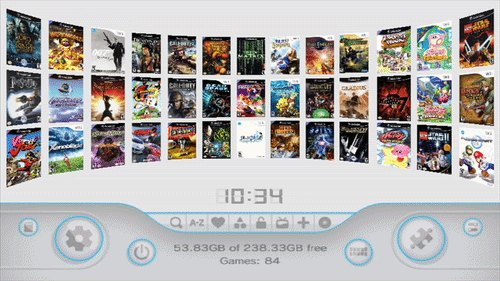
Through my unlocked Wii U—and through the work of the community—I had already experienced what I had been waiting for. I already had GameCube games running on my system. Not just a few titles. Not a rotating library. My own library—and then some. All running smoothly, looking incredible, and feeling completely at home on both the GamePad and my TV. No waiting. No subscriptions. No wondering if or when a game might show up. It was just… there. Ready whenever I was. And that’s when the weight of all of this really hit me. For years, there were conversations—questions about whether something like this was even possible. Whether the hardware could handle it. Whether it would ever happen at all. And for a long time, those questions just lingered.

But then I sat there, in front of my TV, loading up games like Eternal Darkness and Luigi’s Mansion on my Wii U. And they worked. Not just technically—but beautifully. Smooth. Clear. Right at home on a modern display. And in that moment, something shifted. All those years of waiting, all those conversations, all those assumptions about what wasn’t possible… they just faded away. Because it was then that I realized—I wasn’t waiting anymore. I had done it. And I didn’t expect to feel as emotional as I did. But sitting there, playing those games on a system I had unlocked myself, it felt like something had finally come full circle. Like I had been holding my breath for years… and could finally let it go. Because this wasn’t just about playing old games. It was about finally experiencing something I had imagined for so long—something that always felt just out of reach. And realizing… it was possible the whole time.

And it’s all thanks to dedicated, passionate gamers. That’s what makes all of this so incredible. The community didn’t just find ways to make these games playable—they found ways to make them feel right on modern displays: sharper image quality, widescreen support, and small but meaningful enhancements that truly make a difference. It’s not about perfection. It’s not about rewriting the games. It’s about care. About preservation. About people looking at something they love and saying, “This still matters.”—and then doing something about it. Because of that passion, that curiosity, and a community that refused to let these games fade away, we didn’t just preserve them. We expanded them. And in doing so, we found something even more meaningful: we no longer have to wait. Once that realization settled in, I stopped looking at my setup as a workaround—and started seeing it for what it really was. The Wii U has quietly become one of the most versatile Nintendo systems I’ve ever owned. And it’s one thing to say that… but it’s another to actually see it.
Let me show you some of my favorite things about this system since I unlocked it. Because this console can play almost everything under the sun, I now have nearly the entire Legend of Zelda catalog organized and ready to play. And I mean… just let that sink in. The Legend of Zelda on NES. SNES. N64. Nintendo DS. Wii. Wii U. Generations of history—right there, in a single folder. It’s absolutely beautiful.

When I first saw all these amazing games laid out like that, in order of their release… I just sat there for a second. Because it didn’t feel real. My excitement didn’t stop there. That same feeling carried over into something even more personal for me—Resident Evil. My favorite game franchise of all time. I don’t have every single entry, but I have a really solid portion of them—the ones that can run on the system—and that alone is incredible to me.

And sure, many of these games have been re-released across modern platforms with improved visuals and performance. But there’s something about playing Resident Evil 4: Wii Edition or Resident Evil: Deadly Silence for the Nintendo DS on this console that just hits differently. When you love a series as much as I do, you end up experiencing it in every form—every version, every port. And in the end, it’s not about the graphics. Not really. It’s about the experience. And having so many of those experiences under one roof… that’s something special.
And then there’s Mario Party.

I never thought I’d see every mainline entry together on a single system. Being able to jump into Mario Party 1 through 10 at the press of a button? That genuinely makes me giddy. It turns something as simple as game night into something a little more exciting—more spontaneous, more complete. And then there are the things I never expected—like the Moonlight app showing up on the Wii U. I’ve used Moonlight on my Steam Deck to stream games from my PC… but seeing it here? That caught me off guard.

The fact that someone brought this to the Wii U is kind of unbelievable. This wasn’t part of the system’s original vision. And yet here I am—wirelessly connecting to my PC and streaming games directly from my Steam library. Playing something like Megabonk on a Wii U? That definitely wasn’t on my bingo card. But it works. And it’s fun. And somehow, it just fits.

What’s been just as rewarding through all of this is a renewed sense of discovery. Having so many games in one place has pushed me to try things I might have otherwise overlooked—and that’s been one of the best parts of this whole experience. Some were games I had always meant to play. Others… I didn’t even know existed. And lately, I’ve found myself drawn into that experience more and more. Exploring at random. Following curiosity instead of a checklist. It helps that my tastes have evolved over time—I’m more open now, more willing to try something new. Because of that, I’ve been spending time with games like Baldur’s Gate: Dark Alliance on GameCube and Final Fantasy Crystal Chronicles: The Crystal Bearers on Wii. And that’s really what this has all become. That sense of discovery. That joy. That quiet wonder of finding something new in something old. It’s what makes this experience so much fun.
It Was Never Just About the Games

Generally, when these essays begin to take shape, it starts with a feeling. After the recent wave of rumors surrounding another possible Zelda: Ocarina of Time remake—spreading across the internet like wildfire—I found myself sitting with a lot of emotions. There was something about it that hit me harder than I expected, and I wanted to understand why. That curiosity led me down a rabbit hole—one that branched into places I didn’t anticipate. At first, I thought I was just reflecting on Nintendo—their patterns, and the way they handle their legacy. But like many of my essays, the deeper I dive, the more profound things become. And through all of it, the foundation has always been the same: perspective. This is just one perspective—my perspective—shaped by emotion, passion, and years of experience with the games, the systems, and the communities that surround them. I’ve always been someone who likes to analyze, to internalize, to ask questions in order to understand. And the more I sit with all of this… the more I realize it was never just about the games. Sure, there are rumors, patterns, announcements—there are always rumors, patterns, and announcements. But these are the moments. The ones that bring excitement, uncertainty… even frustration. And underneath all of it, there’s something deeper. Something human. Connection.

Gaming, in all its forms, has a way of bringing people together—not just through the games themselves, but through the experiences they create. The memories we carry with us. The moments we share with others. Whether it’s sitting side by side on a couch, passing a controller back and forth, or connecting with people across the world through a shared love of something that meant just as much to them as it did to us. These aren’t just games. They’re experiences that stay with us. They become part of our lives in ways we don’t always realize at the time—shaping how we think, how we feel, and how we connect with others. They give us something to talk about, something to bond over, something to revisit years later and still feel something real. And maybe that’s why we care so much. Not just about what these games are—but what they meant to us. And what they still mean.

And honestly? If Nintendo releases a new Ocarina of Time remake, it’s a win. It gives people a chance to experience something meaningful all over again—maybe in new ways, maybe for the very first time. It’s a win for gaming, a win for players, and a win for the community. But if these rumors turn out to be false, and nothing happens… that’s okay too. Because these games don’t just disappear. They don’t fade away. The community makes sure of that. Through shared passion, curiosity, and a deep respect for what these experiences meant—and still mean—people continue to preserve them, rebuild them, and carry them forward—not because they have to, but because they care enough to do it anyway. And I think that’s what surprised me the most. When I first started writing this, I wasn’t in a great place with it. I felt deflated, frustrated, even a little lost in what all of this meant. Something as simple as a rumor had me questioning more than I expected. So I did what I always do—I started digging, trying to understand it, breaking it down, looking at patterns, past experiences, everything I’ve seen over the years as a gamer. And for a while, it felt like this was going to end as just that—a report, another reflection on what didn’t happen. But somewhere along the way, something changed.
I stopped focusing on what was missing and started seeing what was already there—the community, the passion, the creativity, and the fact that people care enough to keep these experiences alive not because they have to, but because they want to. That realization shifted everything for me. And honestly, that brings me a kind of peace I didn’t expect to find when I started writing this—and one I didn’t realize I needed. I hope, in some way, you felt something here too.
Thanks for reading.
Sincerely,
BlueNile101



Made my girlfriend a heart-shaped jigsaw from our vacation photo, laser-cut on 3mm basswood. Anniversary gift — happy tears.