
2025: The Year I Rediscovered Gaming


Ah, 2025. What a year. This was the year I rediscovered gaming. And I don’t mean I just played a bunch of games, high-fived myself, and called it a day. This was something fundamentally different. I found myself actually enjoying gaming again. I found immersive experiences—ones that helped me reconnect not only with the games themselves, but with myself. For the first time in a very long time, I felt that spark I had when I was younger. My love for this medium goes back to when I was five years old, sitting cross-legged on the floor with my NES controller, discovering entire worlds through a tiny CRT screen. That feeling carried me through every console generation. But somewhere along the way, something shifted. Not in my love for games, but in how I experienced them—and what I felt compelled to do with that experience. That shift is something I want to reflect on.
Come with me on a journey.

Looking back, that shift didn’t happen all at once. It built slowly over time, until it eventually took shape when I co-created Paradigm Gaming (now The Paradigm Society). When I think about where things really started to change, my mind always goes back to Twitch. For those who don’t know, I used to be an avid streamer. From 2017 to 2024, I lived inside that culture—the connections, the excitement, the shared energy. I was there when Twitch started gaining traction, long before Amazon swooped in. I remember the Wild West days of streaming, when all we had was OBS, a janky webcam, and a dream. As Twitch grew, Paradigm Gaming grew with it. And most importantly, so did I.

At first, it was simple: just play games live with people who wanted to hang out. But it quickly became much bigger. The excitement kicked into high gear, and with it, my ambitions.

Gaming was still the heart of streaming, but the way I approached games had fundamentally changed. If I decided to stream something like Super Metroid, it stopped being a simple choice where I could just go live and play. My brain would immediately kick into full production mode: build a layout, add sound effects, update the alerts, design a promo graphic, maybe even cut a trailer. And before I’d even beaten the game, I’d already be thinking about highlight reels and prepping for whatever came next.
Being part of The Paradigm Society wasn’t just about streaming; it was about building something bigger—crafting an identity, shaping a community, giving our little corner of the internet its own personality. Carrying that mantle quickly became an obsession. It was fun, exhilarating, and energizing. It pushed me creatively in ways I never expected.

I loved building something. I loved the connection. I loved sharing games I adored. But over time, the pressure began to shift. What once felt creative and exciting slowly became consuming. It wasn’t just about playing anymore; it became about everything orbiting the games. And with that shift came the second-guessing: Will people like this? Does this work? How do I make it better?
That’s when the anxiety started to creep in.
To top it all off, I didn’t have the ability to stream all the time. I work. I’m married. I have friends and a life outside the internet. Balancing everything was always a struggle. If I found a game I wanted to play, I’d tell myself I couldn’t touch it off-stream—I needed to save it for the next broadcast. But if I was already in the middle of something else, I had to finish that first. Consistency mattered to me, and I wanted my audience to experience the journey from start to finish. But that commitment came with its own challenges. Since I usually streamed only once or twice a week, finishing a game could take weeks. Sometimes we never circled back at all, because life happens. And the hardest part was returning to a game I had once been excited about, only to realize that spark was gone. The momentum had slipped away. My heart just wasn’t in it anymore. And that truth hit harder than I expected. I found myself wanting to do so much, to discover something new, yet I kept shutting the door on that curiosity because I felt obligated to stick to the plan. Without realizing it, I was limiting myself.

Looking back now, it’s clear how tangled everything had become. But even in the stress and the burnout, there was another part of the story—one I never want to erase or downplay: I genuinely loved my time on Twitch. Some of the most important people in my life came from those years. Paradigm Gaming itself was co-created with my best friend—someone I still talk to every day—and those shared creative years shaped both of us. Twitch gave me more than an audience; it gave me friendships, purpose, and a place to grow in ways I never expected. I learned so much and created things I never imagined I could, from themes and templates to sound cues, alerts, banners, videos, and social media posts—the whole production pipeline. At first, it all felt like an incredible creative challenge. I was building a brand, a space, an identity. I represented The Paradigm Society, and I was proud to carry that mantle. I wanted to elevate the brand—and, in many ways, elevate myself however I could. And for over seven years, I genuinely feel like I succeeded. I chased every idea, took on every project, and poured myself into all of it. Outside of being married, it became one of the biggest commitments of my life.
But eventually, it came at a cost.

I burned myself out—caught in a spiral of anxiety between creating content around the games I wanted to play and performing live for hours at a time. When I hit that point, I knew I needed to step back and make a change. Streaming, editing, all of it. I had to choose my mental health. What I didn’t expect was the withdrawal. When I stepped away from Twitch, the silence hit harder than I imagined. I had spent years channeling my energy into building something I deeply believed in, so when I tried to watch a show or play a game afterward, my brain wouldn’t stop slipping into “content mode.” Everything became a potential video, a potential event, a potential project, a potential collaboration. I had to retrain myself to stop thinking like a content machine and relearn how to simply enjoy things for myself. It wasn’t easy. But slowly, I got there.
The First Flicker of Rediscovery
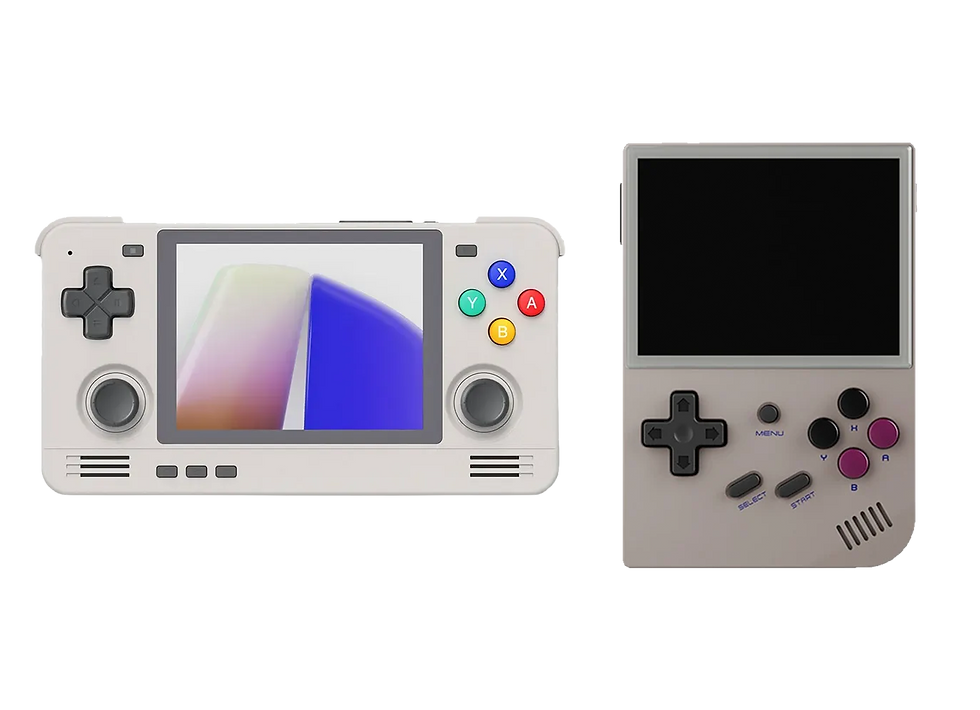
Even as I slowly unraveled myself from “content mode,” I knew I needed something that could help me remember why I loved games in the first place—something intimate, something grounding. Something that brought me back to those early days of sitting cross-legged on the carpet, fully immersed in a glowing world that felt like mine alone. ROM hacks and handheld emulation devices like the Retroid Pocket 2 and the Anbernic RG35XX ended up being that spark. They opened a door I didn’t expect—one built on curiosity, creativity, and play. There was something fascinating about seeing what fans like me were creating with the games I grew up loving.

New levels, new challenges, new interpretations, new ideas. ROM hacks weren’t just nostalgia—they were rediscovery. They took familiar worlds and showed me what they could become in the hands of passionate players. I got lost in some incredible projects—Banjo-Kazooie: Nostalgia 64, a reimagined N64-style adventure that feels like a lost sequel; The Legend of Zelda: Sands of Time, a bold alternate-history take with time-bending puzzles; Super Mario Bros. 3Mix, a massive celebration of the entire Mario series; and Super Metroid: Ascent, a beautifully challenging vertical remix of a classic. Each one reminded me just how endlessly creative the gaming community can be.

And the handhelds themselves carried their own kind of magic. Tinkering with them felt personal in a way that traditional consoles never did. I could customize the interface, choose the look, reorganize the menus, swap themes, test different emulators—little touches that made each device feel like mine. I loved pushing their boundaries just to see what they were capable of, as if each retro handheld had its own secret personality waiting to be uncovered. There was also something strangely “official” about playing a ROM hack on one of these devices. It wasn’t just loading a file—it felt like rediscovering a lost cartridge, some alternate-universe version of a classic that had always existed but I’d never found. And playing games that originally lived on large home consoles—like Resident Evil 2 for the Sony Playstation, a game I first experienced on a full-sized TV—on a tiny handheld screen only amplified that intimacy. It made the experience feel closer, more focused, almost like the game was being retold directly to me from a new perspective.

Handheld gaming has always been a more personal way to play, but this felt different—more intentional. ROM hacks, emulation, and customization stripped gaming down to its purest form: a game, a player, a moment. And in those quiet, focused moments—holding a world in my hands instead of broadcasting it—I started finding myself again. And then something happened that widened that spark into something much bigger. I got a Steam Deck—and everything shifted. In so many ways, it felt like the ultimate handheld device: PC games in my hands, a Linux-based OS with a full desktop mode, an emulation powerhouse, a remote-play machine, and a fully customizable system I could shape however I wanted. It instantly filled a space I didn’t realize had been empty.
The Reset Button I Didn’t Know I Needed

The Steam Deck didn’t just revive my interest in gaming—it reset it. Suddenly I was discovering new games I never would’ve tried, revisiting titles I’d abandoned years ago, and experimenting with genres that felt fresh again. Because it runs on a Linux-based operating system, it opened the door to a whole new layer of exploration beyond gaming. I’d been curious about Linux for years but had never fully committed to trying it. Suddenly, I found myself installing Linux Mint on an old PC, experimenting with Ubuntu as a replacement OS for my Plex server, and falling down a rabbit hole of tinkering that felt exciting rather than overwhelming. But more than features or software or convenience, it was the feel of it that mattered. Handhelds have always carried a kind of intimacy for me—gaming stripped down to its core. Just me, the game, the experience, and the moment. The Steam Deck amplified that feeling in a way I didn’t expect. It became the bridge between the kid who fell in love with gaming on an NES and the adult who had slowly, unintentionally, turned gaming into work.

On the Deck, I could pick up a game simply because it interested me. No rules, no structure—just following whatever felt fun in the moment. I could play for ten minutes or two hours without that voice in my head telling me I “should” be doing something with it. And beyond the games themselves, I found joy in exploring the system’s depths. The Steam Deck invites you to tinker, to poke around, to unlock its little secrets. Before long, I was asking myself, “What else can this do?” That sense of freedom brought back a spark I hadn’t felt in years. Even the technical side—Linux, emulation, customization—became part of the fun. These weren’t tasks or chores; they were discoveries. The Steam Deck reminded me that curiosity can be joyful, that learning can be playful, and that gaming can still surprise me. Slowly, it peeled back the layers of burnout I had built up over the years. It reintroduced me to the simple joy of getting lost in a world, beating a boss, revisiting an old favorite, or just relaxing with something familiar. It reminded me why I fell in love with video games in the first place. Most importantly, it taught me a lesson I didn’t know I needed: gaming doesn’t have to be a performance. It can just be for me.
A New Player Joined the Party

In the middle of all this rediscovery, life changed in the biggest way possible—I became a dad. When my daughter arrived, everything that once felt urgent suddenly had to pass a new test: Does this truly deserve my energy? Streaming didn’t. The pressure to outdo myself didn’t. The constant hum of productivity didn’t. But sharing the things I genuinely love—quietly, honestly—started to matter again in a way I wasn’t expecting. Becoming a dad reshaped how I saw my own passions. Through Twitch, gaming had become something tied to output—content, branding, events, community building. But becoming a father made me rethink all of that. If I want to teach her anything about curiosity, passion, or creativity, I don’t want her to see my interests dim under the weight of expectation. I want her to see them shine. I want her to see what it looks like to genuinely enjoy the things you love.

The Steam Deck unexpectedly became one of the safest places for that joy to return. Playing while she napped beside me felt different—calmer, more grounded. Gaming wasn’t something I did for an audience anymore; it became a quiet, personal space I could slip into between feedings, diaper changes, and the beautiful chaos of new parenthood. It wasn’t an escape. It was a reminder of who I am outside of work, outside of expectations, outside of all the noise I used to drown in.

One of the biggest lessons I’ve learned as a new parent is that while I’ve taken on all these new responsibilities, I’m still me. I’m still the person who grew up loving video games, who found comfort and connection in those worlds, who fell in love with the way games bring people together. Becoming a dad didn’t erase any of that. It simply added a new lens, new perspectives, and a healthier sense of balance. And honestly, that realization matters more than I expected. Because there’s a quiet pressure in adulthood—especially in parenthood—that your passions are supposed to fade into the background. That joy is something you “grow out of.” That the things that once defined you should be boxed up and replaced with more “serious” responsibilities.
But that couldn’t be further from the truth.
If anything, becoming a parent made me appreciate those parts of myself even more. The things I love didn’t disappear as my life expanded; they became part of the foundation I stand on. They remind me of who I am, where I’ve been, and what I want to pass on. They keep me grounded. They keep me human. And they help me show up as a better, fuller version of myself for the people I love.

We also live in a time where everything seems to orbit around content, algorithms, and output. It’s easy to get swept up in it—easy to mistake performance for passion or momentum for meaning. Sure, there’s real fun in sharing pieces of yourself online, in discovering creators, in connecting through the things you love. But coming from a content mindset changes how you see the world. For me, it shifted from excitement to pressure—an endless loop of what’s next? and how do I outdo myself again? It’s exhausting. And when it comes to gaming, I want something different for my daughter. I want her to discover games—and anything she loves—from a place of genuine curiosity and excitement. I want her to see games the way I once did: as doorways to imagination, creativity, and connection. Not as tasks or outputs or productivity, but as experiences you enjoy simply because they bring you joy.

Becoming a dad is surreal. It changes your world in ways you can’t fully prepare for. It reframed everything for me. The things that once felt urgent or overwhelming suddenly had to make room for something far more important. I started thinking differently about how I spend my time—what deserves my focus, what fuels me, and what I want to pass on. And in that shift, gaming found a new place in my life. Not as a project or a content engine, but as something simple and steady I could return to in the quieter moments—moments that feel smaller, yes, but somehow more meaningful than ever. Those moments anchor me. They remind me that the things we love are worth holding onto, even if we end up holding them in new ways. And that new perspective made even the smallest gaming milestones feel worth celebrating again. Not for a wide audience, not for the algorithm—but for me. Which is why, this year, I decided to keep one of my favorite Paradigm Gaming traditions alive in a new way.
My Completed Games of 2025

One of my favorite traditions from my streaming days was creating an “achievement unlocked” post whenever I finished a game. I’d grab a screenshot from the stream and stamp it with a big “completed” label—a small celebration of the journey we had all shared together. After stepping away from Twitch, I decided to keep that tradition alive, just in a quieter way. When I finished a game on my own time, I still marked the milestone; I simply shared it in The Paradigm Society’s Discord instead of broadcasting it on social media. It became a fun, personal way to stay connected to the community while honoring the games that defined my year.
This year, I’ve completed eight games. But what’s funny is that even though I finished that many, I’ve discovered even more—new titles I never would have tried before and old favorites I found myself falling in love with again. Some of these discoveries aren’t games you “complete” in a traditional sense, but they’ve occupied so much of my time and attention that they feel just as meaningful as the ones I officially beat. And in their own way, those experiences deserve recognition too. And the games I completed this year ended up telling their own story — a kind of time capsule of where I’ve been, what I’ve rediscovered, and what I’ve fallen in love with again.

Soul Reaver: Remastered was the first big one. I never thought I’d see this game on modern consoles outside of emulation, yet here I was, replaying one of my all-time favorites on a handheld. My teenage self was ecstatic. The remaster captured everything I loved about the original while giving it the polish it always deserved. It felt like reconnecting with an old friend — familiar, but refreshed in all the right ways. I can only hope we eventually get the same treatment for Blood Omen 1 and 2, Legacy of Kain: Defiance, and maybe — if we’re lucky — enough excitement to justify a brand-new entry in the series.

From there, I finally completed Bloodstained: Ritual of the Night. I had been playing it on and off since its release, but something clicked when I revisited it on the Steam Deck. Indie games just feel more inviting on handheld devices. There’s just something about it that kept me locked in. And considering my love of the Castlevania franchise, I wanted to see this spiritual successor through to the end. I’m glad I did. It scratched my itch for something new in the Metroidvania genre, and now I’m genuinely excited for the next entry, Bloodstained: The Scarlet Engagement, releasing next year.

After that, I revisited Batman: Arkham Asylum for the first time since it launched nearly fifteen years ago. And honestly? It still holds up incredibly well. Stepping back into Arkham reminded me why this game set the standard for superhero titles in the first place — tight design, incredible atmosphere, and a combat system so good it redefined the genre. It was around this point that I realized something unexpected: I was forming a quiet little list. For the first time in years, I found myself asking, What else might I finish before the year ends? Not as content. Not as a project. Just as a gamer again.
A big part of that rediscovery came through Assassin’s Creed—a series that had woven itself through my life for years, yet one I had never experienced in proper order. My wife had just finished Assassin’s Creed Origins and jumped straight into Assassin’s Creed Odyssey, which inspired me to go back to the very beginning.

Revisiting the original Assassin’s Creed felt like opening a time capsule—except this time, the modding community had given it new life. Thanks to Nexus Mods, I found an entire library of community-made enhancements that transformed this 2007 classic into something unexpectedly beautiful: high-resolution textures, improved lighting, even ray tracing. The game underneath was still the same—the missions just as repetitive as I remembered—but that fresh coat of paint let me appreciate it from a completely new angle. This time, I slowed down. I let myself sink into the world, feel the rhythm of its design, and recognize the strange mix of simplicity and ambition that laid the groundwork for everything the franchise would eventually become. It was nostalgic, tedious, rewarding, and fascinating all at once.

Finishing the first game left me wanting more—not just more Assassin’s Creed, but more of Altaïr’s story. For years, I knew Assassin’s Creed: Bloodlines existed on the PSP, but I had never played it. Revisiting the original made me realize how curious I was about what came next for this character. So I decided to jump into Bloodlines for the very first time. It’s simplified, sure, but also far more polished than I ever expected from a handheld spinoff. The controls clicked immediately, the story added more depth to Altaïr, and it fit so neatly into the timeline that it felt like discovering a lost chapter I didn’t know existed. It was surprisingly charming — and surprisingly fun.

From there, I finally tackled the one entry I’d always missed: Assassin’s Creed II. I had watched my wife play it more than a decade ago, so I assumed I knew it well enough. I was wrong. Experiencing it firsthand was completely different. The ambition, the scale, the world, the soundtrack — everything felt alive. Modding it to higher resolutions and enhanced lighting made it look shockingly modern, but what truly stood out was its heart. This is the moment the franchise became itself, and playing it now made me appreciate just how much it evolved from the first. It was one of the most memorable gaming experiences I’ve had in years.

Later, inspired by friends (and a little by nostalgia), I returned to the Zelda series with The Minish Cap. I had never beaten the final boss, Vaati, back in 2004 — I was twenty years old and too stubborn to collect Kinstones or explore properly. But this time was different. Twenty-one years later, I finally did it. And the game surprised me with how joyful, colorful, and lovingly crafted it is. It carries the DNA of Ocarina of Time, Wind Waker, Oracle of Ages/Seasons, and A Link to the Past, yet still stands proudly on its own. Completing this game from start to finish after so long felt like closing a loop — like giving my younger self a victory he never got to claim.
And then came one of the biggest surprises of the year: Metroid X-Fusion.

A friend sent me a link to it out of the blue, and I had no idea what I was walking into. What I found was a total conversion of Super Metroid—essentially transforming it into a full SNES-style reimagining of Metroid Fusion, a game originally released for the Game Boy Advance.
X-Fusion uses Fusion’s assets to tell a completely new take on that story: new abilities, new bosses, remixed B.S.L. Station sectors, expanded navigation dialogue—the works. Unlike the GBA version, you’re not being funneled from point A to B. The station is massive, open, and built for true exploration—something the original never fully embraced. And it’s brutal. Dark-Souls-level brutal. But it’s also brilliant, ambitious, and unforgettable. Playing it reminded me why I love ROM hacks in the first place—the passion, the creativity, the “what if?” ideas made real by fans who care enough to rebuild an entire game from the ground up. Experiencing a GBA title reconstructed with the look and feel of a native SNES game was mind-blowing in the best way.
Discoveries and Rediscoveries
Not every game I touched this year was something I finished. Some were discoveries, rediscoveries, or deep dives into experiences I had either missed or never fully appreciated. And honestly, those moments have been just as meaningful as the games I completed.
Fallout: New Vegas

I’ve beaten New Vegas before—years ago on the Xbox 360—but this time I wanted the full PC modded experience. I installed a Nexus collection called VeryLastKiss’s New New Vegas, a 700+ mod overhaul that modernizes the game from top to bottom. It adds sprinting, real-time looting, new lighting and weather systems with 3D rain, refined aiming, dynamic crosshairs, improved animations, expanded Legion presence, meaningful karma, and a livelier wasteland overall. After spending nearly 60 hours in this game, I can honestly say that with all these enhancements, it feels less like a modded classic and more like a full-on remake.

Revisiting it with this level of polish has been incredible. The modding community always finds new ways to breathe life into beloved worlds, and New Vegas proves just how transformative that passion can be.
Vampire Survivors

I finally gave Vampire Survivors a try after hearing about it nonstop—and wow. Now I get the hype. It’s addictive, chaotic, cathartic fun, and the Steam sale made it an easy impulse pick. Ten minutes in, I was hooked. It’s one of those games where you start a run “just to see what happens,” and suddenly an hour has vanished. And the wild part is how deceptively simple it all looks on the surface. You move, things explode, objects fly everywhere—and somehow your brain enters this strange Zen state where chaos turns into clarity. Before I knew it, I had 60+ hours in the game, and I still feel like I’ve barely scratched the surface of what it has going for it. There’s always another secret to uncover, another evolution to chase, another character to experiment with. It hits that perfect balance of mindless and strategic—just enough planning to keep you engaged, just enough chaos to keep it fun. It’s the kind of game that reminds you how powerful a simple idea can be when it’s executed perfectly.

But more than anything, Vampire Survivors showed me something important this year: that rediscovering gaming doesn’t always require sweeping narratives or massive open worlds. Sometimes all it takes is a game that grabs you by the dopamine receptors and refuses to let go. A game that makes you say, “Okay, one more run,” even though you know damn well it won’t be just one.
The Elder Scrolls IV: Oblivion Remastered

I missed Oblivion when it first came out. Back then I was deep into Call of Duty and other fast-paced shooters on the Xbox 360, and it just never crossed my radar. That changed earlier this year when I finally picked up the original on Steam and modded it heavily. My logic was simple: if I could make Fallout: New Vegas look like a brand-new game, why not give the same treatment to something I’d barely touched before? And honestly, wandering through Cyrodiil for the first time felt… magical. I was only beginning to get a feel for the world when Bethesda dropped Oblivion Remastered out of nowhere—and at an amazing price. Even though I was enjoying my modded version, something about that announcement awakened something inside me. I had to dive in. And after 80+ hours (and counting), dive in I did. I still haven’t finished it—the game is absolutely enormous—but that’s part of the charm.

Oblivion Remastered has become pure comfort for me: exploring, crafting, fighting, wandering. It’s warm, nostalgic, endlessly charming, and now more beautiful than ever. I may be late to the party, but I’m so glad I finally showed up.
The Lord of the Rings: Return to Moria

When it released, The Lord of the Rings: Return to Moria didn’t exactly set the world on fire. Reviews were mixed at best, and a lot of people dismissed it as unpolished or underbaked. So I never gave it much thought—until it went on sale on Steam. Because I genuinely love the world of The Lord of the Rings, I figured… why not give it a shot? Fast-forward 100+ hours later, and this game has me absolutely hooked! And I still haven’t even finished the main campaign. Return to Moria is surprisingly cozy: I can explore at my own pace, gather resources, rebuild ancient dwarven halls, and carve out my own little refuge deep within the mines. Every structure I restore or design feels personal, like I’m shaping my own corner of Middle-earth. What surprised me most is just how much the game clicks with me. The base-building alone is fantastic. There’s action too, of course—orc patrols, goblins lurking in the dark, and a mysterious evil haunting the mine—but even the danger feels secondary to the sense of discovery.

The game constantly rewards curiosity with hidden chambers, forgotten relics, and unexpected details that make exploring Moria endlessly satisfying. It may not have won critics over, but for me, it has been an absolute blast. Sometimes the best gaming experiences are the ones you try despite what “everyone” says—and end up loving all the more because of it.
Metroid Prime: Hunters

With the power and flexibility of the Steam Deck, this system can emulate just about anything you throw at it. Because of that, I wanted to revisit a game I never managed to finish: Metroid Prime Hunters for the Nintendo DS. The timing felt perfect too—Metroid Prime 4 had finally released, and one of its main antagonists, Sylux, made his very first appearance in Hunters. It felt right to go back to where his story began. Part of the fun for me was seeing how far I could push this game on modern hardware. I wanted to increase the resolution, clean up the visuals, and remap every control—even the stylus inputs—to make the experience more comfortable. It took a bit of tinkering, but eventually I got it all working. And I’ve got to say… it’s wild how different the experience feels now. Back in the day, Hunters was amazing but absolutely brutal on the hands. The stylus-controlled camera was clever for its time, but my hand would cramp like crazy after just a short session. As much as I love Metroid, I could never finish it. Stylus-heavy games just hit differently—The Legend of Zelda: Phantom Hourglass gave me the same struggle.

But on the Steam Deck, the entire experience transforms. I mapped the right analog stick for camera controls, assigned shooting to the X button, and even set up the right trackpad for touch-style inputs—while still keeping the touchscreen available if I want it. Suddenly the whole game feels smooth, modern, and genuinely exciting to revisit. And with the MelonDS emulator boosting the resolution, it looks incredibly sharp.

Revisiting Hunters also felt fitting because of the Sylux connection to Metroid Prime 4, but even beyond that, this playthrough has been a reminder of something simple and wonderful: old handheld games can come alive in new ways with just a little tweaking. A remapped control scheme, a higher resolution—sometimes that’s all it takes to make an old favorite shine again.
I still need to finish Hunters, and I absolutely plan to. But right now? Metroid Prime 4 has taken over every spare moment I have—and honestly, can you blame me? I’ve been waiting for this game since its original announcement in 2017! I’m fully immersed in its new world, taking my time, savoring every moment. Once I’ve had my fill, I’ll head back and finally finish Hunters.
Closing Thoughts on a Year That Changed Me
As you can see, my gaming experiences this year have been incredibly diverse. Looking back at everything I played, discovered, and revisited—it genuinely makes me smile. It’s rare to have a year where joy shows up in so many different forms, whether through massive open-world adventures, tiny handheld wonders, or unexpected surprises from fan-made passion projects.
And it wasn’t just the games themselves. When I look back at my blog, I’ve written more gaming essays this year than any year prior. Including this one, that makes ten—ten pieces of reflection, memory, analysis, curiosity, and celebration. That alone amazes me. Somehow, my love for gaming didn’t just return; it branched out, finding new mediums of expression. Writing became its own extension of rediscovery. Because this year reminded me that gaming doesn’t have to be a performance, a project, or a plan. It can be intimate. Personal. Quiet. It can be something you hold close—whether that’s a handheld glowing softly in the dark, or a few precious minutes carved out while your child sleeps beside you. And it can also be about discussion and genuine expression.

Through all the essays I wrote this year—whether I was reflecting on nostalgia, questioning where the industry is headed, or saying goodbye to pieces of gaming history that once shaped me—I realized something important: the writing itself became part of my rediscovery. Each piece was its own checkpoint, its own moment of clarity, another angle on the same truth. I wasn’t just playing differently this year—I was thinking differently, too. I was reconnecting with the part of myself that loves stories, ideas, and the act of making sense of the things that matter to me.
Maybe that’s what rediscovery really is: not returning to who you were, but finding a new way to be who you’ve always been.
I’m still the kid sitting cross-legged in front of a screen, losing himself in worlds that felt bigger than life. But I’m also the adult who has learned to hold those worlds with intention—with balance, with gratitude, and with the understanding that joy doesn’t need an audience to be real.
This year didn’t just remind me why I love gaming. It reminded me why I love being someone who loves gaming—someone who creates, reflects, explores, and still feels that spark after all these years. And as I move into whatever comes next—new games, new essays, new seasons of life—that spark is something I plan to carry with me. Not loudly. Not performatively. But quietly. Gratefully. Fully. A rediscovery, held close.
Thanks for reading.
Sincerely,
BlueNile101


Comments